What Is a Hash Hole? The Joint With a Rosin Core
A hash hole is a joint with a thin rope of hash rosin running down its centre, packed all round with ground flower. As it burns, the rosin core melts away and leaves a hole in the middle of the ash, which is where the name comes from.
Hash holes are also called donuts, and the rosin core is called a snake or a worm. They started showing up on the US west coast in the early 2020s. The usual story credits a California grower who saw rosin-filled joints at a cannabis fair in Barcelona in 2018, though it’s hard to confirm.
Baller Club doesn’t sell hash holes. The closest things on our shelf are two kinds of infused pre-roll, compared with a hash hole in the table below.
What’s inside a hash hole
A hash hole has two ingredients, ground flower and hash rosin, rolled in a large paper and often finished with a glass or wood tip.
Hash rosin is a solventless concentrate. It’s pressed with heat and pressure from hash, either dry sift or ice-water hash, rather than straight from flower. Live rosin is hash rosin made from plants frozen fresh at harvest, and the live rosin guide explains how it’s made.
Hash holes are bigger than a standard 1 g pre-roll. Retail listings we checked run 1.8 to 2.5 g, and the ones that break it down put 1.5 to 1.75 g of flower around a 0.3 to 0.5 g rosin core. Home recipes use about the same: 1.5 g of flower to 0.5 g of rosin. That makes the rosin roughly a sixth to a quarter of the weight.
Gram for gram, rosin carries about twice the THC of flower. In a 2026 study of 1,727 cannabis products listed for sale online in Ontario in early 2024, rosin averaged 54% THC and dried flower 26%.
Why the rosin goes in the centre
The core sits in the middle so flower surrounds it on every side. That keeps the oil off the paper, and the burning flower heats the rosin from the outside in.
Rosin burns more slowly than flower, so the edge burns down first and the centre lags behind. The lit end shows a ring of ember around a hole.
Sellers also say the core slows the whole joint down and keeps it from canoeing, or burning down one side. We couldn’t find a test that measures either claim.
Glass and wood tips are common on hash holes because a paper filter soaks up the oil.
Hash hole vs infused pre-roll vs caviar joint
A hash hole is one kind of infused pre-roll. Joints coated in kief, painted with oil or filled with diamonds are infused too, but they don’t have a single core down the middle. A joint rolled with crumbs of caviar weed laid along its centre comes closest.
| Hash hole | Liquid diamond infused pre-roll | Don Pablo infused pre-roll | Caviar in a joint | |
|---|---|---|---|---|
| Concentrate | Hash rosin | Liquid diamonds, plus a kief coat | Infused inside and out, coated in kief and THCA diamonds | Bud coated in oil, often rolled in kief |
| Where it sits | One rope down the centre, with flower all round | In the joint, with kief on the outside | Inside and on the outside | Crumbs in a loose line down the middle |
| Made with a solvent? | No, rosin is pressed with heat and pressure | Liquid diamonds usually start as a solvent extract | Not stated | Depends on the oil |
| Size | Often 1.8 to 2.5 g | 0.7 g, five to a pack | 1.5 g, with a glass filter | Whatever you roll |
| At Baller Club | Not sold | $25 a pack, $7.14 a gram | $15, $10 a gram | Not sold |
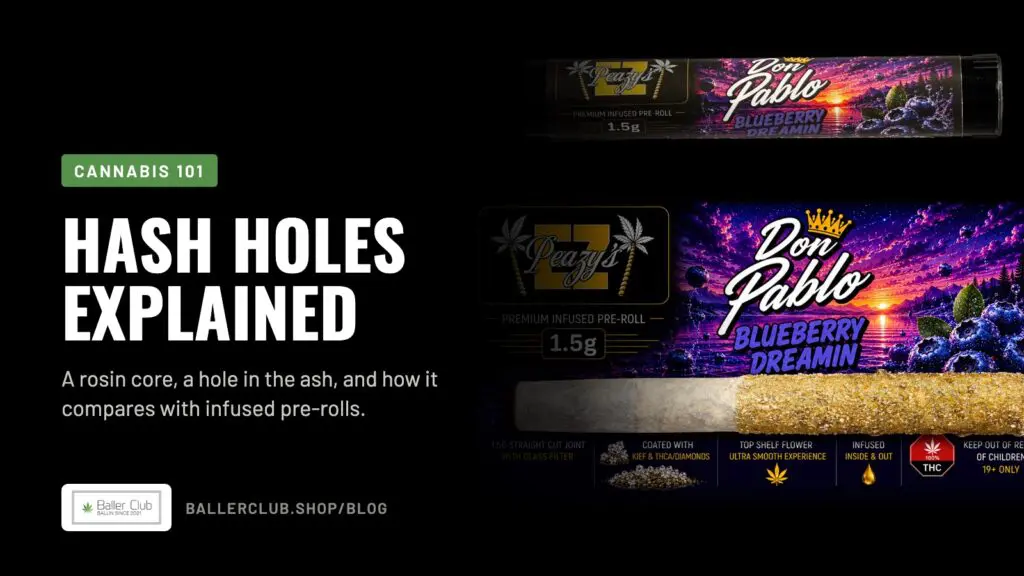
Of the two we sell, the EZ Peazy’s Don Pablo Blueberry Dreamin Infused Pre-Roll 1.5g is the single, heavier joint, sealed in a tube. The EZ Peazy’s Blueberry Dreams Liquid Diamond Infused Pre Rolls 5-Pack splits 3.5 g into five smaller pre-rolls.
Both lines come in several flavours, and the infused pre-rolls guide covers how to smoke one.
Why hash holes cost more
Rosin is the expensive part. In the same Ontario study, 18 rosin products averaged $36.24 a gram, against $7.91 for dried flower, about four and a half times as much.
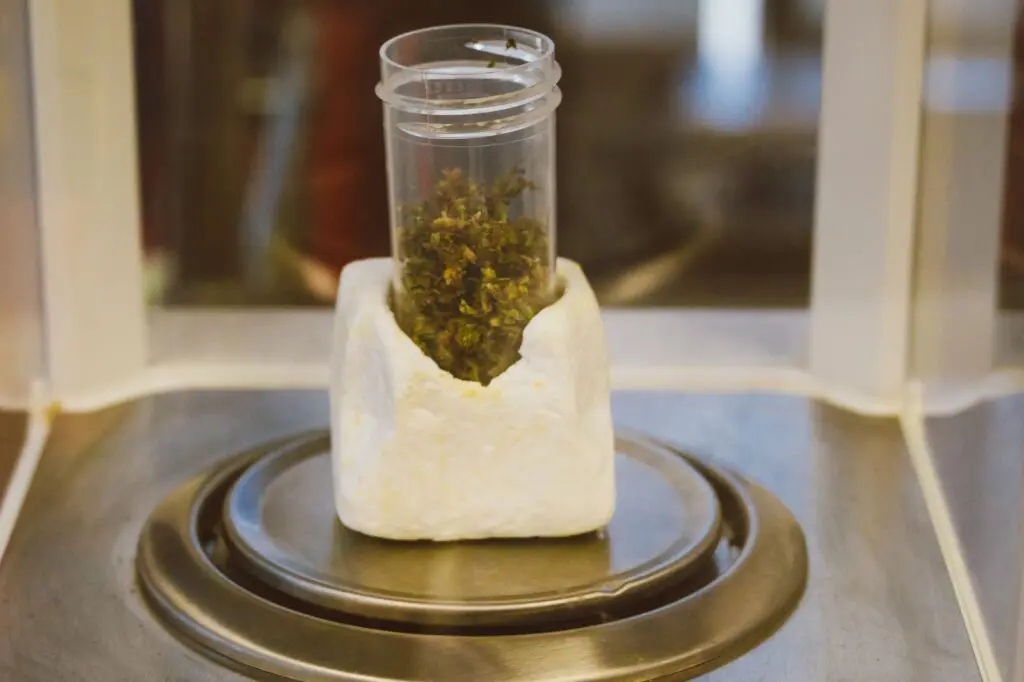
At those averages, here’s what goes into a hash hole made to a common home recipe:
| Ingredient | Amount | At the study’s average price |
|---|---|---|
| Dried flower | 1.5 g | $11.87 |
| Rosin | 0.5 g | $18.12 |
| Total | 2 g | $29.99 |
The rosin is a quarter of the weight and about 60% of the ingredient cost, before anyone is paid to roll it or pack it in a tube. Rosin prices in the study ran from $19.95 to $72.65 a gram, so a core can cost well above the average.
Hash rosin is made in two stages: the plant’s resin glands are first collected as hash, and then the hash is pressed into oil.
How people roll a hash hole
A hash hole is rolled like a large joint, with the rosin laid in before it’s closed. This outline assumes you already have rosin, and how to roll a joint covers the rolling itself.
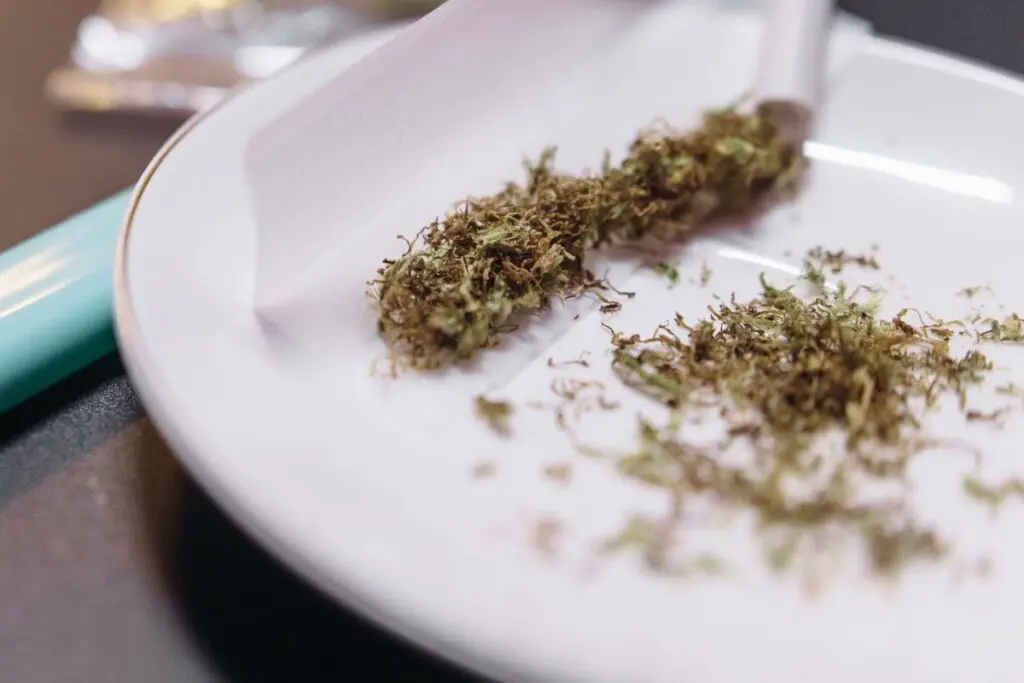
- Grind about 1.5 g of flower on the coarse side.
- If the rosin is too soft to shape, chill it briefly. Gloves keep it off your fingers.
- Roll about 0.5 g of rosin into a thin, even snake, about two-thirds the length of the flower.
- Spread the flower along a king-size paper, lay the snake down the middle and cover it with more flower so it doesn’t touch the paper.
- Add a glass or wood tip, roll it firm and twist the end shut.
Light it slowly while turning it, then take steady pulls. Rushing can make it canoe or cave in the hole.
We don’t sell rolling papers, tips or other rolling gear.
Common questions
What is a hash hole?
A hash hole is a joint built around a thin rope of hash rosin, with ground flower all round it. The name comes from the hole that forms in the middle of the ash as the rosin melts away.
What’s the difference between a hash hole and an infused pre-roll?
A hash hole is one kind of infused pre-roll, with all the concentrate in a single rosin core down the centre. Other infused pre-rolls carry oil in the flower or a coat of kief or diamonds on the outside, like the liquid diamond and Don Pablo pre-rolls we sell.
How much does a hash hole cost?
We don’t sell them, so we can’t quote a shelf price. At the average early-2024 prices in an Ontario study, the 1.5 g of flower and 0.5 g of rosin in a common home recipe come to about $30 before rolling and packaging.
How long does a hash hole last?
No source we found gives a burn time. Hash holes run about twice the weight of a 1 g pre-roll, and the rosin burns slower than the flower. One retailer’s guide suggests a 2.5 g roll for two or three sessions, kept in its tube somewhere cool and dark in between.