Trichomes: What the Crystals on Weed Are and What Frost Means
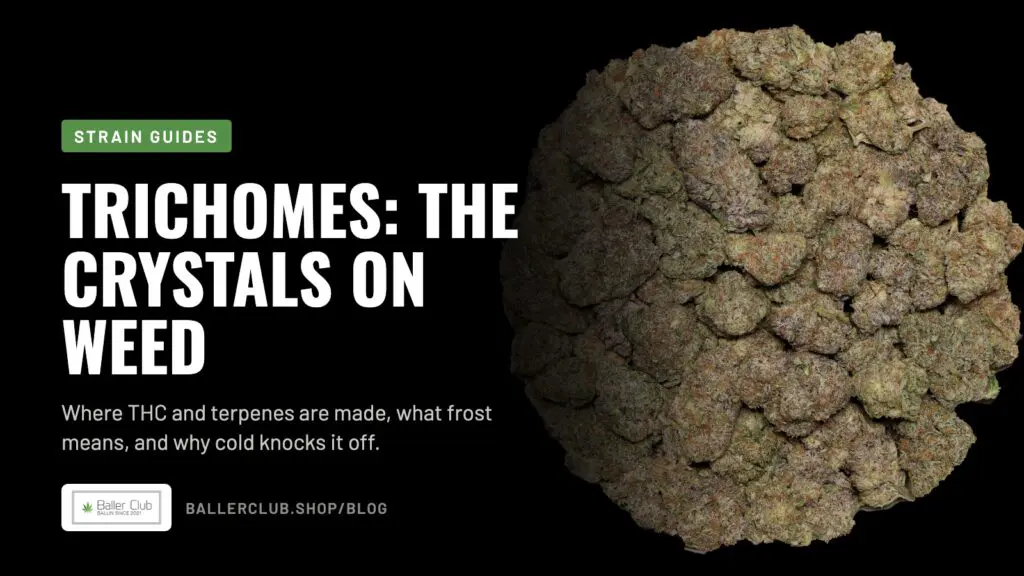
Trichomes are the tiny resin glands that cover cannabis flowers, and they’re the crystals on weed that make a good bud look frosty. They make and store most of the plant’s cannabinoids, including THCA, plus the terpenes behind each strain’s smell, so they’re the part of the plant you’re paying for.
The Baller Club Briefing: what frost means 0:27
This post in 30 seconds.
Filmed in November 2026. Dates and prices in the video are from the day we filmed. The site always shows the current ones.
Read the transcript
Top story today: frost, the sparkle on your flower.
Those crystals are trichomes, tiny resin glands that make and store most of the plant's cannabinoids and terpenes.
Heavy frost points to resinous flower that was handled gently. Only a lab test measures potency.
Cold makes resin heads brittle. Let a cold parcel warm up before you open it, and don't shake the bag like a snow globe.
The full story's on our blog. Be gentle with your buds.
What are trichomes?
Botanically, a trichome is any small outgrowth on a plant’s surface. Cannabis grows a few kinds, and the ones that matter to buyers are glandular stalked trichomes: a thin stalk with a round resin head on top.
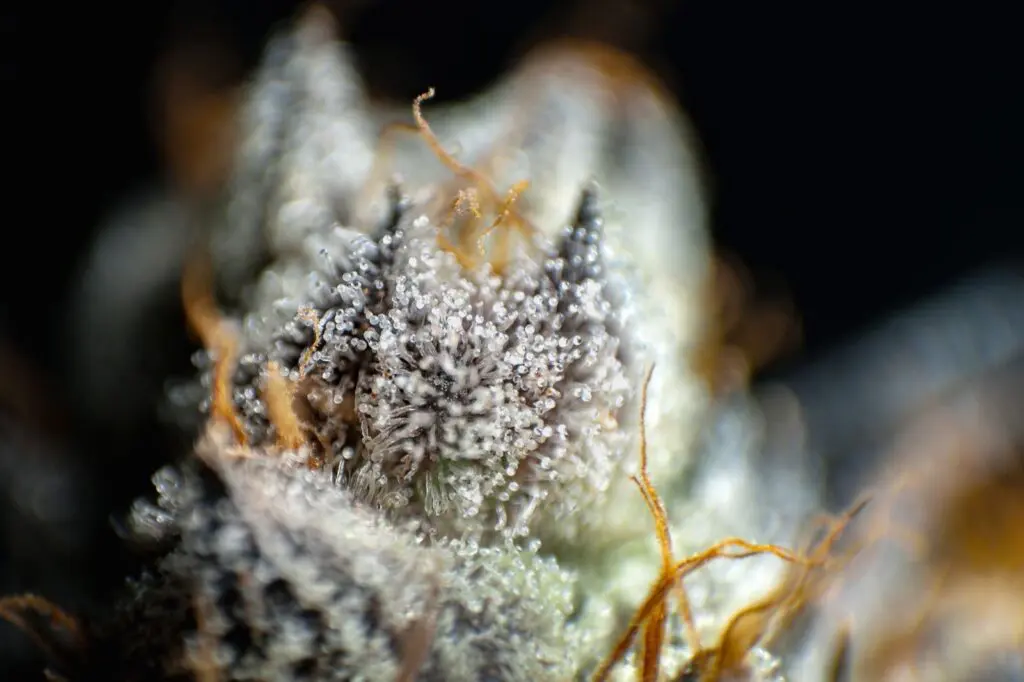
They’re packed onto the calyces and small bracts of the female flower and spread onto the sugar leaves around them. Each head is roughly 0.04 to 0.11 mm across.
When researchers at Simon Fraser University counted them on dried, hand-trimmed buds from four strains, they found 12 to 30 resin glands per square millimetre. Under a jeweller’s loupe or a phone macro lens you can see the stalks and heads. Without one, they blend into the sparkle people call weed crystals.
Where THC and terpenes are made
A layer of secretory disc cells at the base of each head makes cannabinoids, terpenes and flavonoids, then stores them in a cavity under the head’s thin outer skin.
Fresh flower holds mostly THCA, the acid form, and relatively little THC. THCA turns into THC when it’s heated by a flame, a vaporizer or an oven. It also converts slowly in storage, at a rate set mainly by temperature and light.
Types of trichomes on cannabis
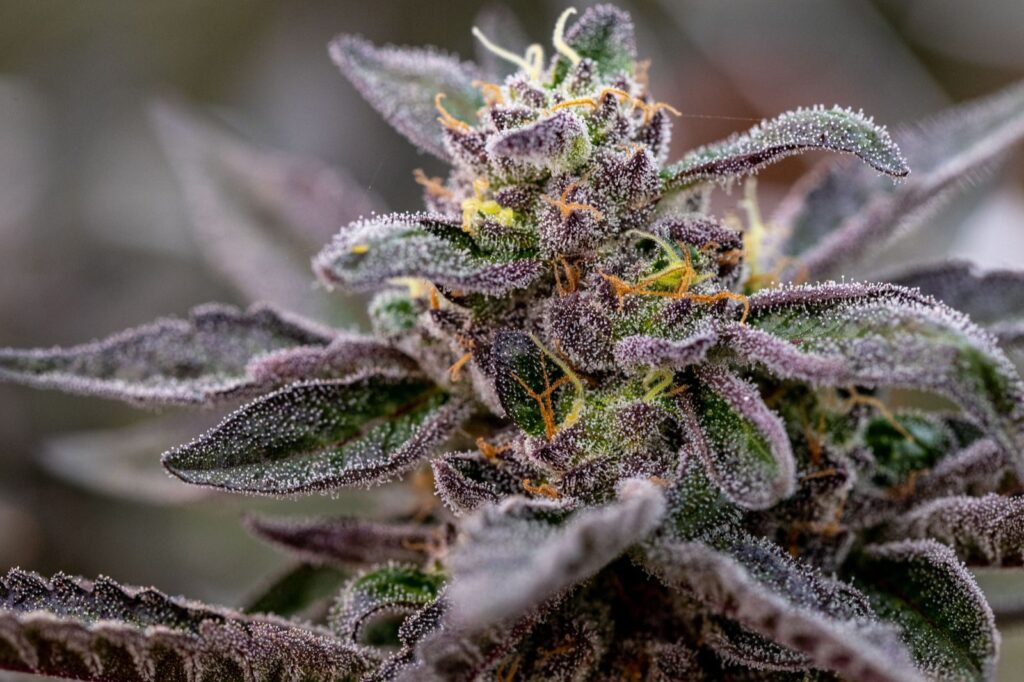
Cannabis grows three kinds of glandular trichome, told apart by the size of the head and the length of the stalk, plus plain hairs that make no resin. The Simon Fraser team found all four side by side on the bracts of young flowers.
| Type | What it looks like | Head size | Where it grows | What it makes |
|---|---|---|---|---|
| Bulbous | Tiny head on a very short stalk | 0.015 to 0.03 mm | Most of the plant’s surface | Least studied, partly because it’s so small |
| Capitate sessile | Round head almost flat on the surface | Between the other two | Leaves, stems, young flowers | Cannabinoids and terpenes, less than stalked |
| Capitate stalked | Round head on a tall stalk | 0.04 to 0.11 mm | Calyces, bracts and sugar leaves | Most of a bud’s cannabinoids and terpenes |
| Non-glandular hairs | Pointed hairs with no head, such as cystolithic hairs | No head | Leaves, stems, young bracts | No cannabinoids or terpenes |
The frost on a finished bud is mostly stalked trichomes, which become visible to the naked eye late in flowering. Their stalks vary a lot, from 0.02 mm to 1.1 mm long in the Simon Fraser study.
Why cannabis grows trichomes
Researchers haven’t settled what cannabinoids and terpenes do for the plant, but a 2021 McGill University review found that the evidence points to defence, a common job for trichomes in many plants.
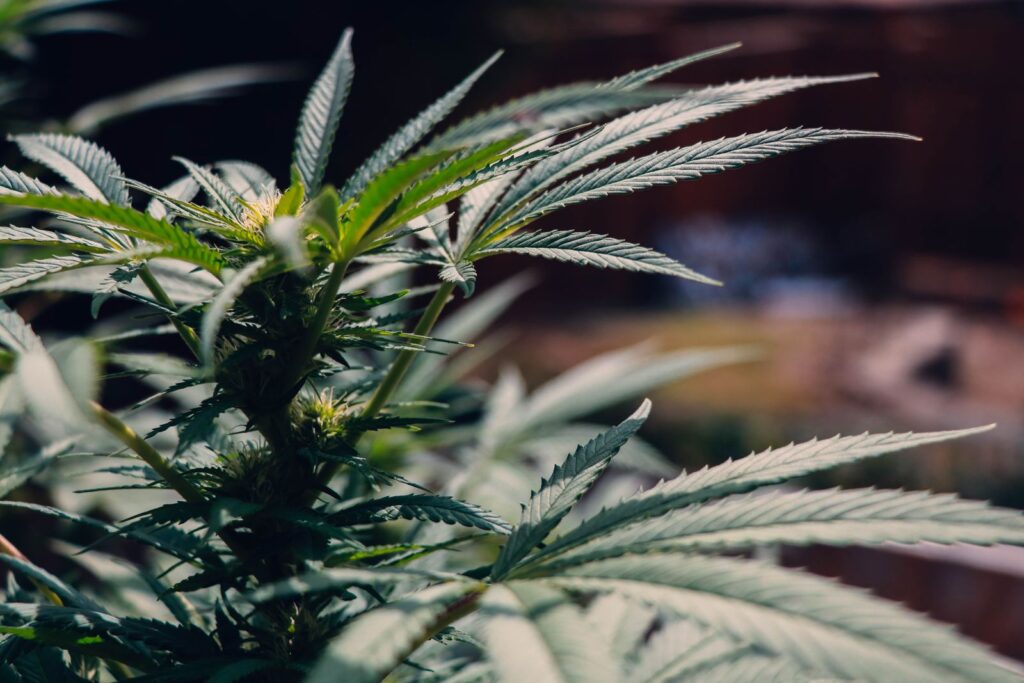
- UV light: in an early study, plants given more UVB light made significantly more THC, which led to the idea that THC shields the flowers from sun damage.
- Insects: pinene and limonene, terpenes that repel insects, are more concentrated in the flowers. THCA and CBGA killed cultured insect cells in lab tests, and a stickier mix of terpenes can make resin thick enough to trap insects.
- Grazing animals: sesquiterpenes, which taste bitter to mammals, are more concentrated in the big lower fan leaves that grazing animals are more likely to eat.
The review’s authors suggest this is why the resin piles up around the flowers, which carry the plant’s seeds.
What frost tells you about quality
A heavy coat of intact trichomes points to resinous buds that were handled gently from trimming to packing. That’s why frost counts toward grade, along with density, trim and smell. AAAA is the highest grade Baller Club carries, with dense buds and heavy trichome coverage, and the AAA vs AAAA guide covers how the grades compare.
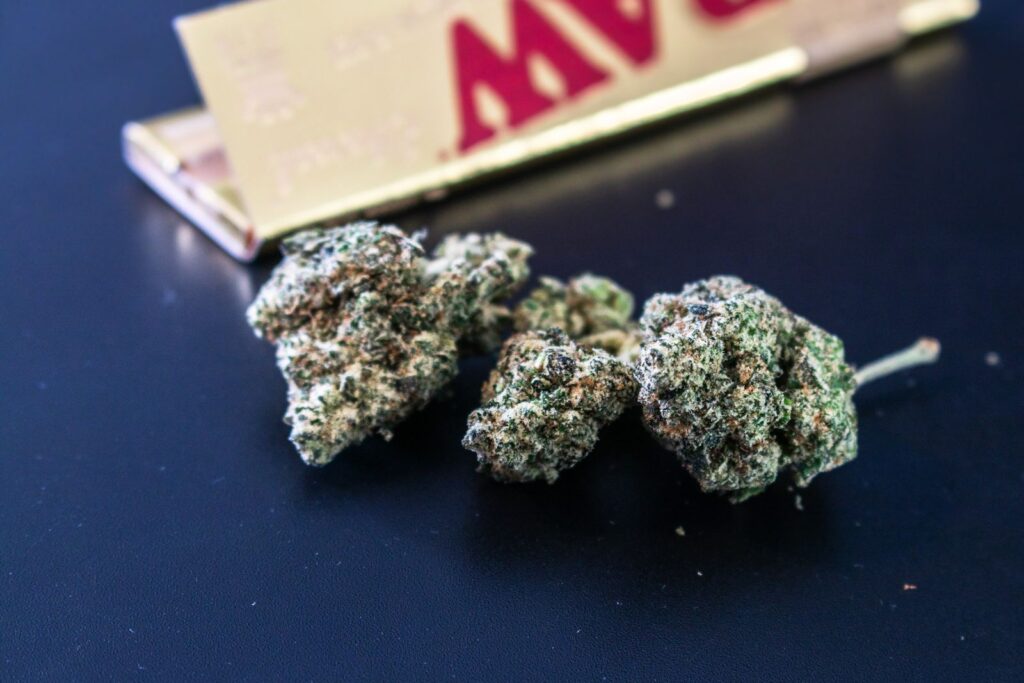
Frost can’t give you a THC number. The Simon Fraser team wrote that in cannabis, the link between trichome density and total cannabinoid levels “has not been firmly established”, and that the enzymes inside each head likely limit how much THCA gets made. Only a lab test measures potency.
The Simon Fraser team compared trimming methods. Hand-trimmed buds kept most of their trichome heads, while machine-trimmed buds had many heads broken off or collapsed, so frost reflects care after harvest as well as genetics.
Fuzzy, grey or cobweb-like white patches can be mould. Does Weed Expire? shows how to tell mould from trichomes.
Clear, cloudy, amber: how trichomes mature
Growers watch the heads turn from clear to cloudy (milky white) to amber or brown as the plant matures, and use that change to time the harvest. Seeing it well takes magnification.
By six weeks of flowering, the Simon Fraser team found stalked trichomes packed densely on the undersides of the bracts. Many heads turned amber-brown at seven to eight weeks, as they released their resin and shrivelled or collapsed. Growers treat heavy browning as a sign the flower is over-mature, and an earlier study suggested those ageing heads hold less THC.
The heads on a bud don’t all change at once. In one bract photo the Simon Fraser team colour-scored, 83 heads were clear, 96 milky and 52 brown.
NC State Extension, working with hemp grown for CBD, points to the same uneven ripening. Its best guess is to harvest once 20 to 30% of the heads have turned amber, checked against at least weekly lab tests.
The orange hairs on a bud are stigmas, part of the flower, and they change colour too, from white to yellow, orange, red or brown depending on the strain. In a 2025 Agriculture Victoria study, 22 of 25 genotypes reached their highest cannabinoid levels once the stigmas were mostly or fully amber.
On dried, hand-trimmed bud, the Simon Fraser team found that drying shrivelled and twisted the stalks, but most heads kept their shape and their skin stayed intact. Round, unbroken heads are what to look for under a loupe on flower you’ve bought.
Trichomes are the raw material for kief, hash, rosin and diamonds
Every concentrate starts by separating trichome resin from the leafy part of the plant, and each one does it differently.
| Product | How the trichomes are collected |
|---|---|
| Kief | Flower is ground and sifted, and loose trichome heads fall through the screen |
| Pressed hash | Kief or dry sift is pressed with heat into a block |
| Bubble hash | Buds are stirred in ice water and the heads are caught in fine mesh bags |
| Rosin | Flower or hash is squeezed with heat and pressure, with no solvent |
| Shatter, budder, live resin | A solvent such as butane dissolves the resin, then is purged off |
| Diamonds | THCA crystallises out of a hydrocarbon extract, leaving a terpene-rich sauce |
The types of hash guide covers kief and hash, resin vs rosin explains solvent and solventless extracts, and THC diamonds covers the crystals. The shatter, cured resin, live resin and diamonds on our shelf are all extracts of trichome resin.
Cold makes trichomes brittle: handling flower in winter
Ice-water hash works because cold makes trichome resin brittle while the rest of the plant stays flexible, so stirring snaps the heads off. Cold buds react the same way on a small scale: shake or squeeze them and more heads break loose.
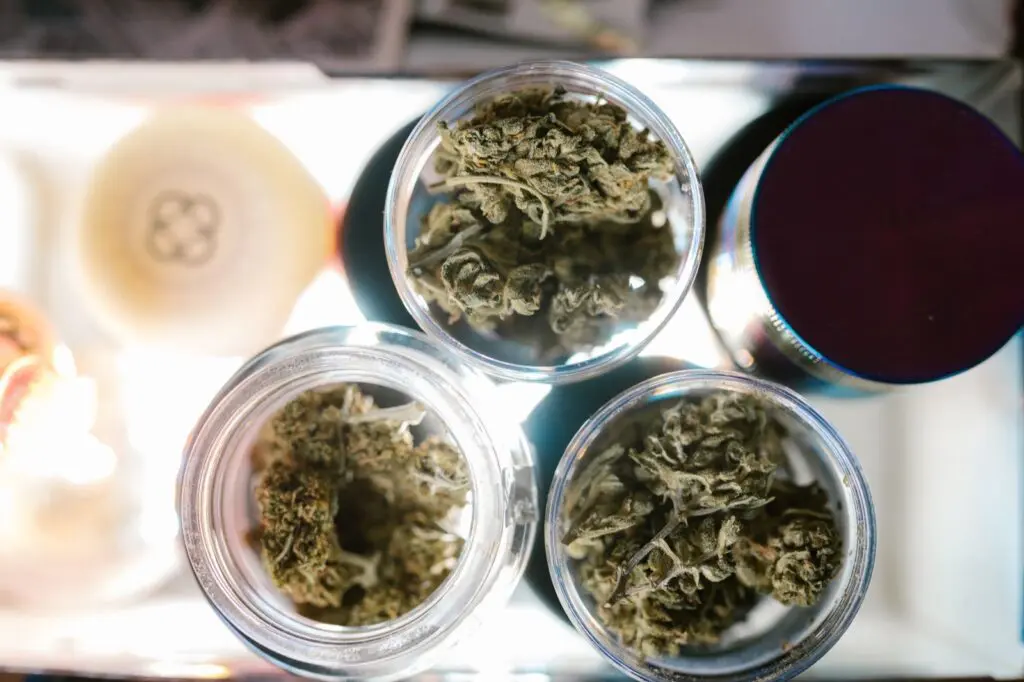
In winter, a parcel can sit for a while in a cold mailbox, on a porch or in a car. A few habits keep the frost on the bud:
- Let a cold package warm up to room temperature before you open it.
- Don’t shake the bag or jar to look at the buds.
- Pick buds up by the stem, and don’t squeeze them to check how dense they are.
- Keep flower out of the freezer.
- Store it in an airtight glass jar somewhere cool and dark, since heat and light speed up changes to the cannabinoids.
The fine, sandy dust that collects at the bottom of a bag or in a grinder’s lower chamber is kief: trichome heads that broke off. You can sprinkle it over a bowl instead of throwing it out, and the grinder cleaning guide covers other ways to use it.
Every Baller Club order is vacuum sealed and shipped in a discreet mailer, so the buds stay put in transit. Once you open it, move the flower into a jar so it doesn’t get crushed in the bag.
Common questions
Are trichomes THC?
No. Trichomes are the glands that make and store cannabinoids, and fresh ones hold mostly THCA, which turns into THC when you heat it by smoking, vaping or baking. Health Canada names THC as the cannabinoid responsible for the high.
Do more trichomes mean better weed?
A heavy coat of intact trichomes points to resinous, carefully handled flower, which is why frost counts toward grade. It doesn’t guarantee higher THC, since researchers haven’t firmly established how trichome density tracks cannabinoid levels.
What do trichomes do?
They make and store the plant’s cannabinoids, terpenes and flavonoids. Researchers think their main job is defending the flowers against insects, grazing animals and UV light.
Is resin the same as trichomes?
No. Trichomes are the tiny glands on a cannabis plant, and resin is the sticky mix of cannabinoids such as THCA, terpenes and other compounds that their heads make and store. On a concentrate label, live resin and cured resin are extracts of that resin made with a solvent.
At what stage do trichomes appear?
The stalked trichomes behind the frost on bud form during the flowering stage, while leaves and stems carry smaller trichomes with little or no stalk. In a 2023 Simon Fraser University study, stalked trichomes were densely packed on the undersides of the flower bracts by six weeks of flowering. Many of their heads turned amber-brown at seven to eight weeks, as they released their resin and collapsed.
What does a trichome look like when ready to harvest?
Its head has turned from clear to cloudy white, and on a ready plant some heads have started to go amber. For CBD hemp, NC State Extension suggests harvesting once 20 to 30% are amber, and growers treat heavy browning as a sign the flower is past its peak.
What does cold do to trichomes?
Cold makes trichome resin brittle, so the heads snap off more easily when buds are shaken, squeezed or ground. Let cold flower warm up before you handle it, and don’t store it in the freezer.
Does hemp have trichomes?
Yes. Hemp is the same species, Cannabis sativa, and grows glandular trichomes too, but under Canada’s Industrial Hemp Regulations it has 0.3% THC or less in its flowering heads and leaves. A study cited by the Simon Fraser team found hemp’s resin heads averaged 80 micrometres across, against 129 in high-THC cannabis.