Kief: What It Is, How to Collect It and What to Do With It
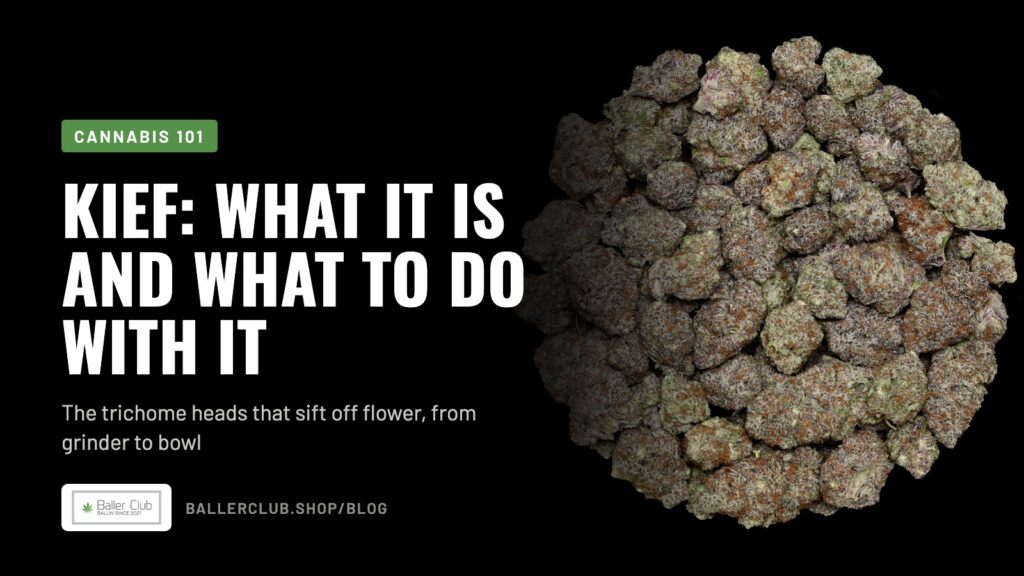
Kief is the fine, pale powder of trichome heads that breaks off dried cannabis flower, and it’s what gathers in the bottom chamber of a grinder. Those heads are where the cannabis plant makes and stores most of its cannabinoids and terpenes, so kief is a concentrate made with a screen and no solvent. You can smoke it on a bowl or in a joint, press it into hash or cook it into edibles.
In short:
- What it is: loose trichome heads, with some stalks and bits of leaf mixed in.
- How you say it: “keef”, to rhyme with leaf.
- How you collect it: with a 4-piece weed grinder, a sifter box or dry sift screens.
- What colour tells you: pale blond kief is mostly heads, and green kief carries more leaf.
- Kief vs hash: kief is the loose powder, and hash is that powder pressed into a solid.
What is kief?
Kief is what you get when the resin glands on cannabis buds come loose and are sifted away from the rest of the cannabis flower. Those glands are trichomes. Each of the trichomes that matter here is a thin stalk with a round head on top, and the heads are the part you want in kief.
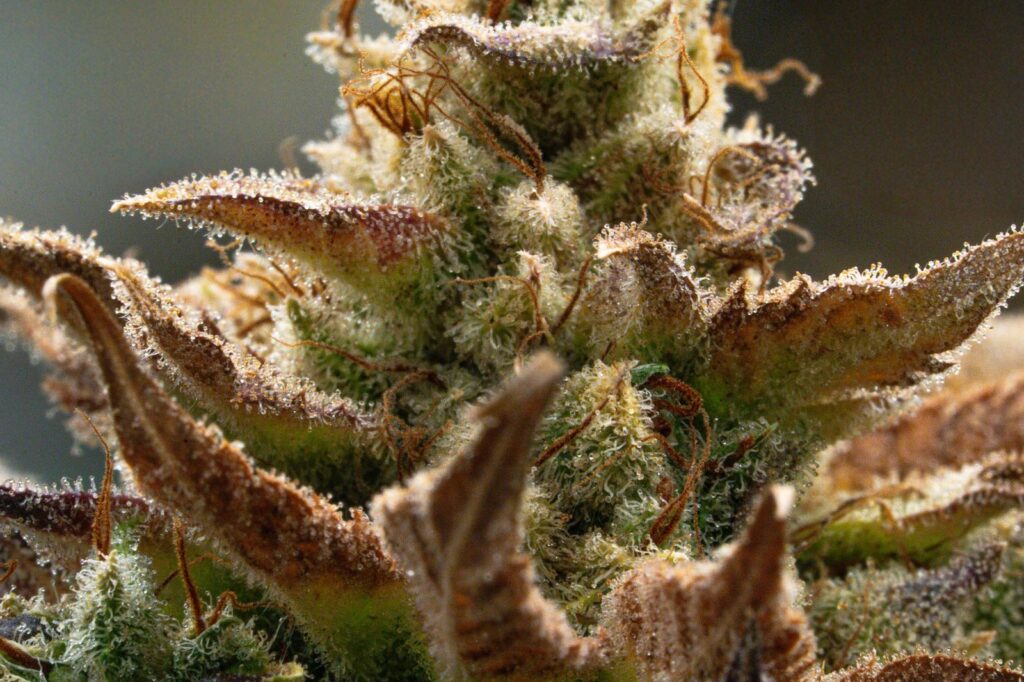
The heads are tiny. In a 2023 Simon Fraser University study of high-THC cannabis, glandular heads measured 40 to 110 microns across. A micron is one thousandth of a millimetre, so the biggest heads are about a tenth of a millimetre wide.
Nothing is dissolved or extracted to make kief. A Canadian retailer’s glossary describes kief as sifted by a mechanical process, with the same cannabinoids and terpenes as the cannabis plant it came from.
Grinder kief is never trichome heads alone. Stalks, plant hairs and small flecks of leaf fall through with them, and how much comes along decides the quality of the kief.
Where the word kief comes from, and how to say it
Kief is pronounced “keef”. The American Heritage Dictionary lists kif, kief and kef as spellings of one word and defines it as “a loose or powdered form of cannabis resin used especially for smoking”. The word comes from the Arabic kayf, meaning pleasure.
It goes by a few other names:
- Pollen. A nickname for the dusty look, which is why sifter boxes and presses are sold as pollen boxes and pollen presses. Real pollen is a different thing, the dust male plants release.
- Dry sift or sift. Kief collected in larger amounts over flat screens or in a tumbler, often with more passes to clean it.
Health Canada groups kief with hash as “physically concentrated extracts”, described as loose trichomes or pressed resin from the cannabis plant.
How to collect kief
There are three common ways to collect kief: a grinder, a sifter box and a set of sifting screens.
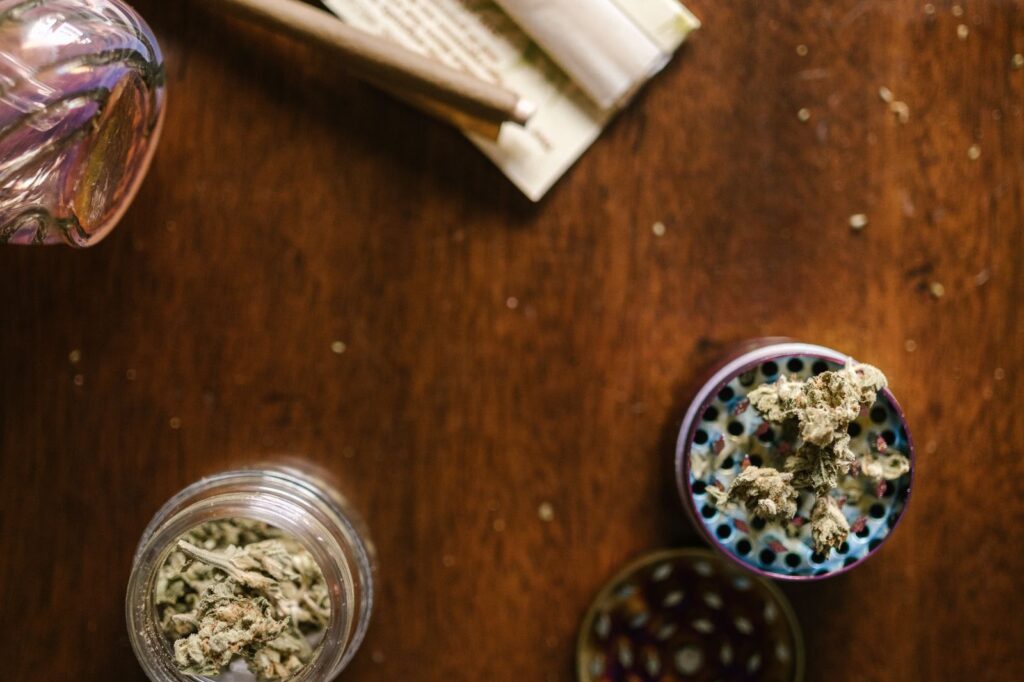
The grinder and its kief catcher
A 4-piece grinder has a fine mesh screen under the chamber that holds the ground cannabis. As you grind and tap, loose trichomes fall through the screen into the bottom chamber, called the kief catcher. To collect the kief, scrape the chamber out with a clean card or the small scraper many grinders include.
A catcher fills slowly. It takes weeks or months of regular grinding to collect kief in any amount. We looked for a tested figure for how much kief a grinder gives and didn’t find one. The amount depends on:
- How much resin the flower carries. Frosty buds shed more.
- How cold the flower is. Cold resin is brittle, so trichomes snap off more easily.
- The mesh. Wider openings pass more powder, and more of it is leaf.
- How much flower you grind, and how much time it spends being tapped above the mesh.
Resin clogs the mesh over time and less kief gets through, so brush it now and then. The grinder cleaning guide shows how.
Baller Club doesn’t sell grinders or loose kief.
Sifter boxes and dry sift screens
A sifter box, also called a kief box or pollen box, is a shallow box with a mesh floor. You rub or shake dried cannabis flower or trim over the mesh, and the kief lands in the tray below.
Dry sift is the same idea with more screens. Makers pass the powder through several of them to separate the trichomes by size, which is where micron numbers come in.
Screen sizes: what the microns mean
A screen is rated by the width of its openings in microns, or by its mesh count in lines per inch. More lines per inch means smaller openings. On one supplier’s conversion chart, 100 lines per inch is 149 microns and 230 is 63.
| Screen opening | Job | What it leaves you with |
|---|---|---|
| About 150 to 250 microns | A coarse first pass. The flower stays on top and anything small falls through | Heads mixed with stalks, hairs and leaf dust. A grinder’s single screen does this job |
| About 125 microns | Holds back particles bigger than a trichome head | Powder with the larger plant bits removed |
| About 63 to 75 microns | A fine mesh the heads sit on while smaller debris is worked through it | Mostly whole heads. Stalks, broken heads and dust end up underneath |
The numbers in the table follow a process a hash maker walked through for one cannabis publication: a 150 micron tumbler first, a 125 micron pass to take out oversized particles, then a 63 micron pass to push out stalks and small or damaged heads. What he keeps is the powder between 63 and 124 microns.
That range roughly lines up with the head sizes the Simon Fraser team measured. It also explains why the kief you collect in a grinder is rougher than sifted kief. A grinder only does the first job in the table, so nothing separates the stalks and dust from the trichome heads.
What colour says about kief
Colour is a check you can make without a microscope. Trichome heads are pale, and leaf is green, so the greener the kief, the more leaf came through the screen.
- Blond, off-white or pale gold: mostly heads. One cannabis publication describes well-cleaned kief as a bright eggshell colour, and lighter kief as the more potent.
- Green or dark: plant material is still mixed in. It burns and cooks the same way, with less resin per pinch.
Colour is a rough guide to quality, and only a lab test measures potency. Kief also darkens over time as it oxidizes, and pressing darkens it again.
Kief vs hash vs pollen
Kief and pollen are two names for the same loose powder, and hash is what that powder becomes once it’s pressed.
| Name | What it is | How it’s made | Texture | How it’s used |
|---|---|---|---|---|
| Kief (pollen) | Loose trichome heads with some plant material | Falls through a grinder or sifter box screen | Fine, dry powder | On a bowl, in a joint, pressed or cooked |
| Dry sift | Kief sorted by size | Shaken or tumbled over several screens | Sandy powder, paler when clean | Same as kief, or pressed into rosin |
| Pressed hash | Kief or sift in solid form | Squeezed with heat and pressure | Firm block that crumbles | Crumbled into bowls and joints |
| Bubble hash | Trichomes washed off the plant | Stirred in ice water and caught in mesh bags | Grainy to sandy | Bowls and joints, top grades dabbed |
Our types of hash guide compares the styles, and the bubble hash guide covers the ice-water method.
How potent are kief and hash?
The closest Canadian figures come from a 2026 study of products listed for sale online in Ontario in early 2024 (Antwi and colleagues, Journal of Cannabis Research). The authors worked from the ranges printed on the listings, so these aren’t their own lab tests.
| Category in the study | Products | Average THC | Range |
|---|---|---|---|
| Kief and sift | 6 | 36% | 25% to 50% |
| Hash | 44 | 44% | 23% to 68% |
Six kief products is a small sample, and the two ranges overlap, so neither is reliably the more potent.
Health Canada gives one potency figure for the whole group of physically concentrated extracts, up to 60%. Go by the number on the label. Both are more potent than flower gram for gram.
What to do with kief
The common ways to smoke kief add it to cannabis flower. Fine powder burns faster than ground weed, and a joint filled with nothing but kief tends to burn unevenly.
- Top a bowl. Pack the bowl with flower and add a pinch of kief on top, so it sits on the flower and doesn’t fall through the hole at the bottom of the bowl.
- Add it to a joint. Spread a thin line of kief through the ground flower before you roll the joint, as evenly as you can.
- Press it into hash. Fold kief in parchment paper and squeeze it with gentle heat and pressure until it holds together as a small block. With more heat and pressure the resin runs out as rosin.
- Make edibles. Kief is raw, like flower, so the THCA in it needs heat first. Follow the oven steps in how to decarb weed, then stir it into butter or oil.
Kief doesn’t work for dabbing the way other concentrates do. It still holds plant material, which scorches on a hot nail.
Kief also turns up in finished products. On our shelf, EZ Peazy’s Don Pablo Infused Pre-Roll 1.5g is coated in kief and THCA diamonds and costs $15. EZ Peazy’s Liquid Diamond Infused Pre Rolls 5-Pack is finished with a kief coating and costs $25.
The infused pre-rolls guide explains the types. Caviar weed covers moon rocks (also spelled moonrocks), which are buds coated in oil and rolled in kief.
How to store kief
Store kief the way you store flower, with more care about moisture, because fine powder clumps and can grow mould when damp.
- Keep it in a small airtight glass container that is completely dry inside.
- Put the container somewhere cool and dark. Light and heat break down cannabinoids and terpenes.
- Move it with a small scoop or a card, not your fingers. It sticks to skin, and skin oils end up in the jar.
The bottom chamber of a grinder works as short-term storage for the kief you collect. A jar with an airtight lid seals better.
Common questions
What is kief called at a dispensary?
Usually kief, or dry sift or sift when it has been cleaned more than once. Some people call it pollen, and Health Canada groups it with hash as a physically concentrated extract.
What is so special about kief?
Kief is the trichomes of cannabis flower, sifted away from the leafy part with no solvent. It holds the same cannabinoids and terpenes as the flower it came from, in less plant material, and you can collect it with nothing more than a grinder.
Is kief or hash stronger?
Neither by rule, because pressed hash is kief in solid form, and pressing adds no THC. In a 2026 study of Ontario product listings, kief and sift averaged 36% THC (25% to 50%) and hash averaged 44% (23% to 68%). Potency depends on how clean the starting powder is, so check the label.
How do you pronounce kief?
Say “keef”, to rhyme with leaf. Dictionaries also list the spellings kif and kef for the same word, which comes from the Arabic kayf.