
Nectar Collector: What It Is and How to Use One
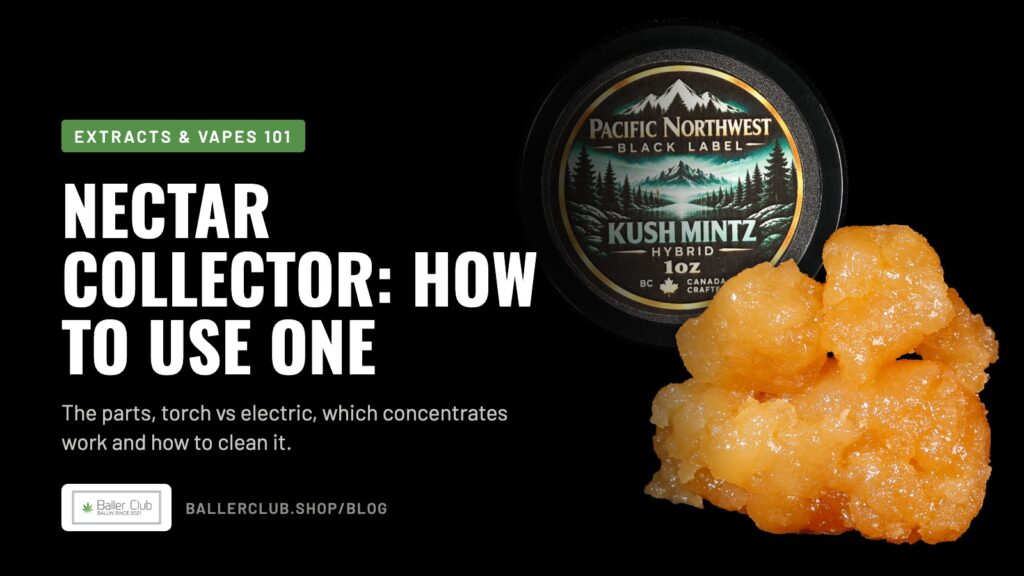
A nectar collector is a straw-shaped tool for dabbing cannabis concentrates. You heat its tip, touch the tip to a small amount of concentrate in a dish, and inhale the vapour through the other end. It’s also called a dab straw or honey straw, and it does the job of a dab rig without a banger or carb cap.
The name started as a brand. The Colorado makers of the original Nectar Collector told High Times in 2014 that it began as a sturdier pipette for vaporizing, with a water chamber added a few months later.
We don’t sell nectar collectors, torches or other hardware, so this guide covers how one works with the concentrates we stock.
Parts of a nectar collector
Like the pipette it started as, a nectar collector is a narrow tube, and it has three parts.
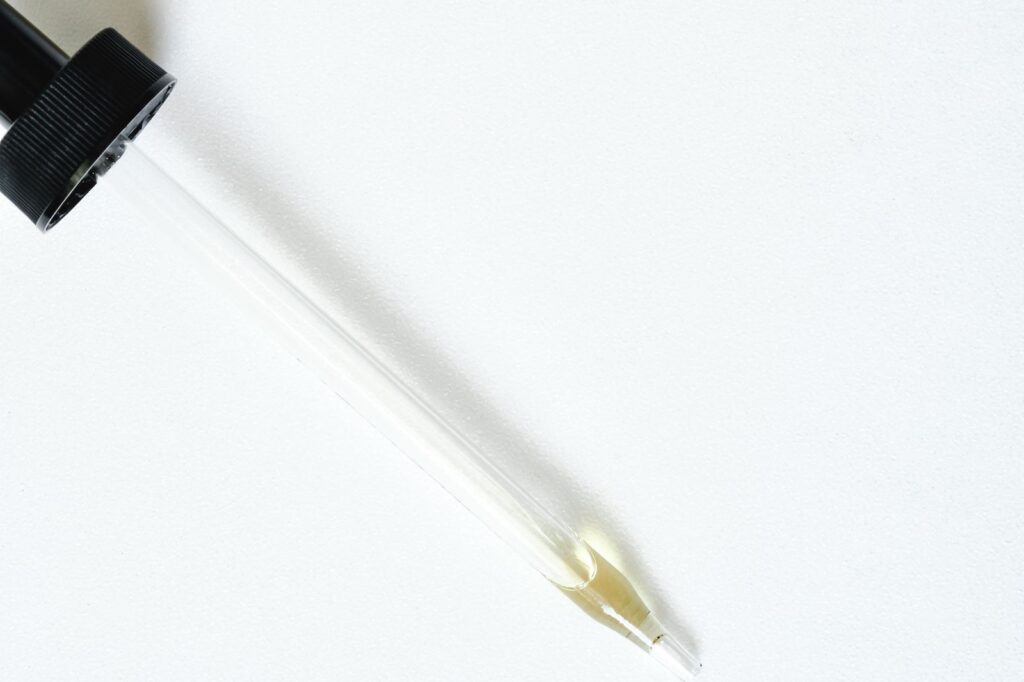
- Tip: the end that gets hot and touches the concentrate.
- Body: a glass or silicone tube, sometimes with a small water chamber that cools the vapour like a mini bong.
- Mouthpiece: the top end you inhale from.
Tips come in three materials:
- Quartz heats quickly and is often described as the cleanest-tasting, but it cools sooner than the other two and can break if dropped.
- Titanium heats fastest, holds heat a long time and won’t shatter, though its taste is sometimes called less refined.
- Ceramic heats more slowly and evenly, holds heat well, and can be harder to clean.
Types of nectar collectors
A torch model’s tip is heated with a butane torch. An electric model swaps the torch for a battery and a quartz or ceramic coil tip.
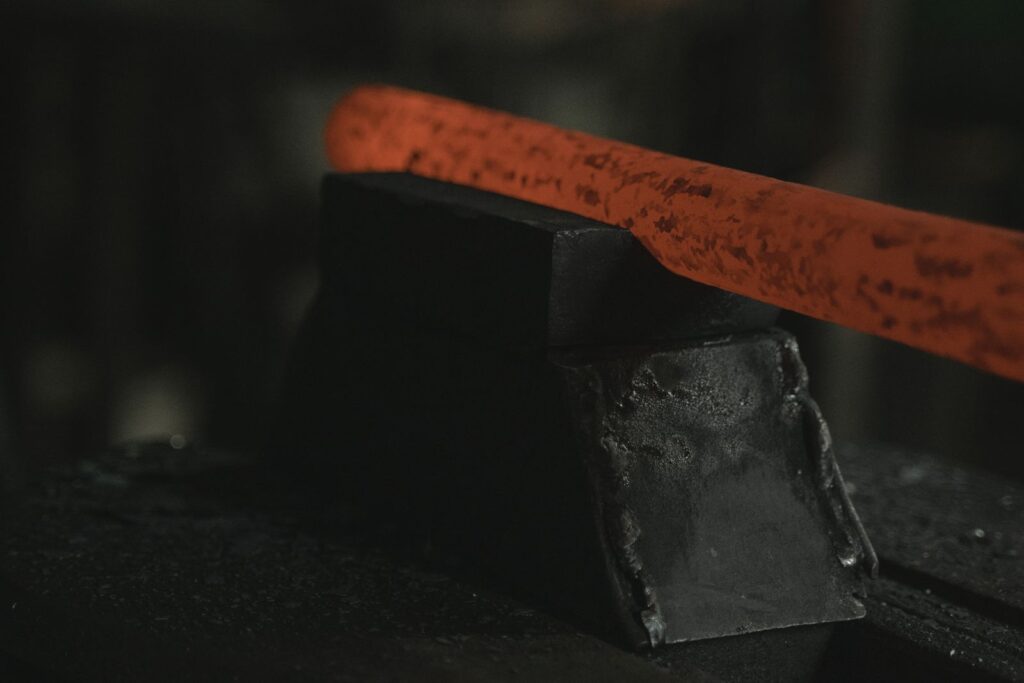
A glowing tip is far too hot. Almost all solids start to glow at about 525 °C, while the table in our how to dab guide puts dabbing at 230 to 340 °C.
Torch models come with glass or silicone bodies, and electric ones come with or without water.
| How the tip heats | Water | Good to know | |
|---|---|---|---|
| Torch model | A butane torch | Some have a small chamber in the body | Glass bodies break if dropped and silicone ones bend. The tip starts cooling as soon as the flame leaves it. |
| Electric | A battery heats a quartz or ceramic coil | None built in, though some come with a hose and adapter for a water pipe | Heats at the press of a button, and the coil tip unscrews for cleaning |
| Electric with a bubbler | The same battery and coil tip | A glass water chamber on the body | More to rinse, and the glass can break |
How to use a nectar collector
These steps are for a torch model. On an electric model, replace steps 3 and 4 with pressing the button and letting it preheat.
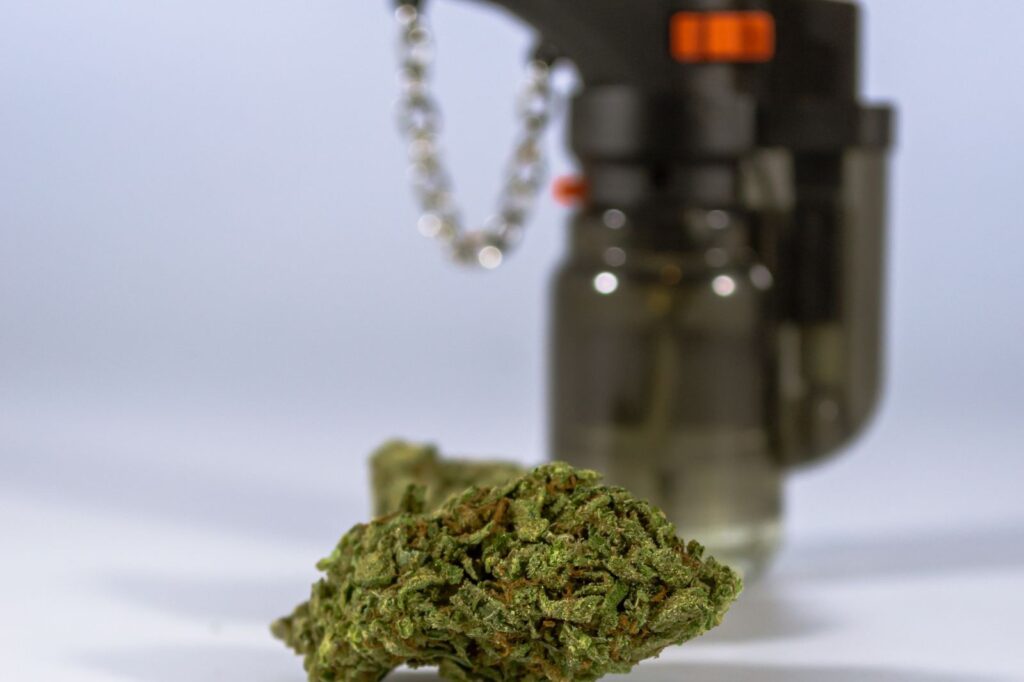
- Add water if it has a chamber. Hold it upside down, pour a little into the mouthpiece end, let the extra drip out and turn it upright.
- Set out the concentrate. Put a piece the size of a grain of rice in a glass or ceramic dish.
- Heat the tip. Turn the bottom third in the flame so it heats evenly.
- Let the tip cool. Wait 15 to 30 seconds, longer if it still glows. Too hot a tip scorches the concentrate and tastes harsh.
- Touch and inhale. Inhale slowly and touch the tip to the edge of the concentrate. Dipping it in can draw concentrate up the tube, where it hardens and clogs.
- Lift it away. Vapour stops when the tip leaves the concentrate, so you control how much you take.
- Rest the tip on glass, ceramic or a stand. Keep it off silicone. Silicone rubber is rated for about 230 °C to 400 °C depending on the grade, and a recently torched tip can run hotter.
Shut the torch off once the tip is hot, and store it out of children’s sight and reach, as Health Canada advises for lighters.
Five quick presses of the button turn many electric models on, but check your manual. If yours has heat settings, start low and turn it up only when you get little vapour, since a harsh or burnt taste means the tip is too hot. Let the tip cool before its cap goes back on.
Which concentrates work in a nectar collector
Firm concentrates are the easiest, because the tip melts only the spot it touches.
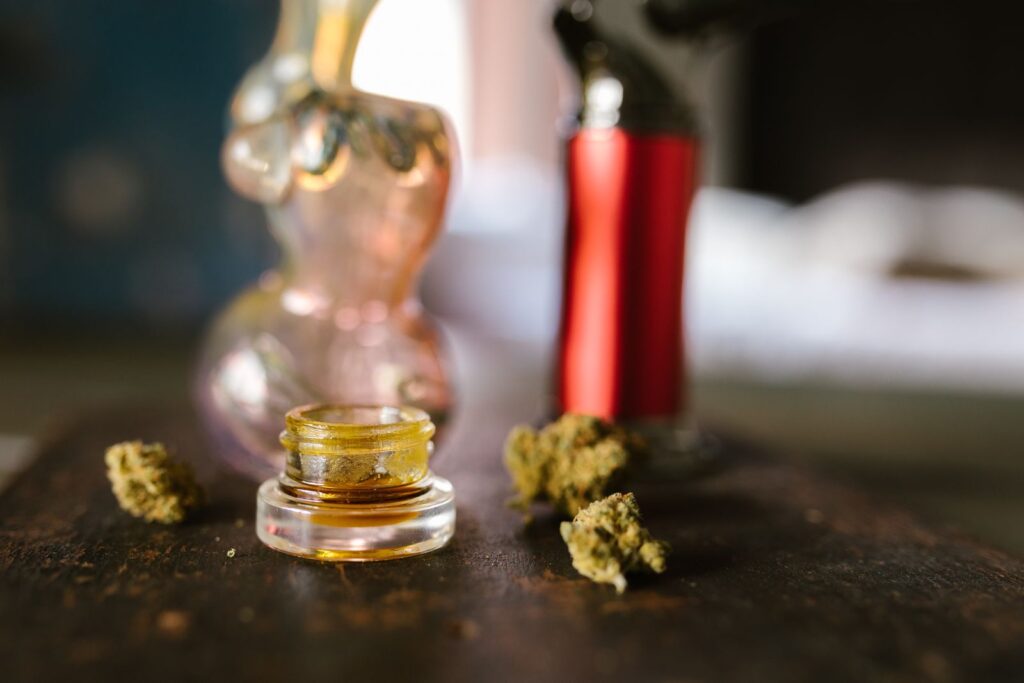
- Shatter is hard and glassy, so it stays put. Keep it cool, since warm shatter gets sticky. Our 1 g shatter is $10, and how to smoke shatter covers four other ways to use it.
- Budder and crumble both work. Crumble is drier and can scatter when the tip lands, so use a dish with sides. Our Pineapple Express Crumble is $10 a gram, and what is budder? compares the textures.
- Cured resin is soft and scoopable like budder. Whip & Drip Co. cured resin is $10 a gram, and 1 oz jars such as Pacific Northwest Black Label Kush Mintz are $170.
- Live resin is named for its starting plant, frozen at harvest, so a batch can be sauce, budder or sugar. Handle it like whichever texture you find. Our No Mids Co. fresh frozen live resin is $20 a gram, and cured resin vs live resin compares the two.
- Sauce is the tricky one. It’s runny, so the tip sinks in easily and pulls it up the tube. Use a little and graze only the surface. Our Peach Panther diamonds and sauce is $15 a gram. Syringe oil like our honey oil behaves the same way, so push out one small drop at a time.
How to clean a nectar collector
After each session, wipe the tip with a dry cotton swab once it’s warm, not hot.
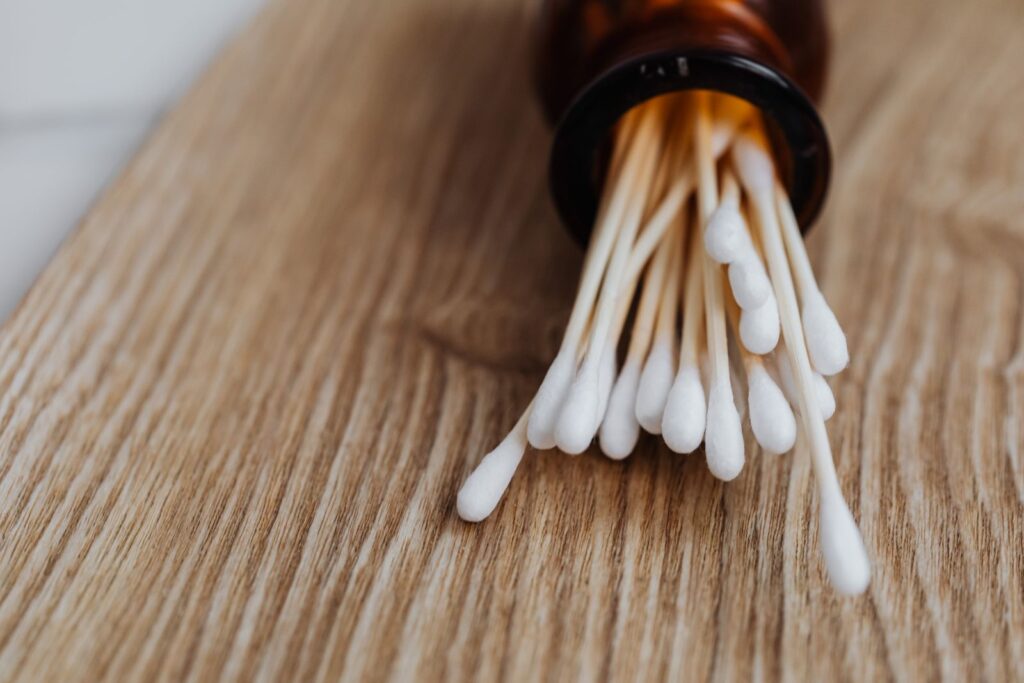
Empty a water chamber at the same time, so the next session starts with fresh water. A pipe cleaner or small brush reaches residue inside a straight glass mouthpiece.
For a deep clean, let everything cool, take the tip off and empty any water. Soak the body and tip in 91% or stronger isopropyl alcohol for at least an hour, then rinse with hot water. The alcohol is flammable, so let every part dry before you torch it again.
On an electric model, keep the battery out of liquid. Soak only the unscrewed coil tip, and run an extra heat cycle after each session to burn off residue.
Nectar collector vs dab rig vs dab pen
All three vaporize concentrate on a hot surface, but the gear and control differ.
| Nectar collector | Dab rig | Dab pen | |
|---|---|---|---|
| Heat source | Torch or battery | Torch or e-nail | Battery |
| Where the concentrate goes | In a dish, and you bring the tip to it | Into a hot banger on the rig | Into a chamber in the pen |
| Water | Optional chamber | Yes | Not usually |
| Heat control | Timing after torching, or a heat setting on electric models | Timing after torching, or a set temperature on an e-nail | A heat setting on many pens |
| How much you take | Lift the tip when you’ve had enough | One portion per dab | Whatever you load |
| Portable | Yes | No, it sits on a table | Yes |
| Other gear | A dish, plus a torch for torch models | Banger, torch or e-nail, dab tool, carb cap | Dab tool |
What is a dab pen? explains how pens heat and load.
Common questions
Is a nectar collector the same as a dab straw?
Yes. Dab straw is another name for the same tool, and Nectar Collector itself began as one company’s product name.
What’s the cheapest kind of nectar collector?
A simple torch model costs the least: a plain silicone or glass straw, plus the butane torch you heat its tip with. Electric models, which add a battery and a heated coil tip, usually cost more than a simple straw.
Are nectar collectors any good?
They work well for small, controlled dabs with very little gear: the collector, a dish and a torch or a charged battery. Runny concentrates take practice, and only some models have water to cool the vapour.
Is a dab rig or nectar collector better?
A nectar collector has fewer loose parts, sets up faster and lets you stop the moment you lift the tip. A rig is the better fit for dabbing at home, since it runs each dab through water and, with an e-nail, holds a set temperature.
How long should a nectar collector tip cool?
About 15 to 30 seconds after torching is a common starting point. If it’s still glowing, it’s above about 525 °C and needs longer.
Do you need water in a nectar collector?
No. Some models have a small water chamber that cools the vapour, and others are a dry straw.
What can you put in a nectar collector?
Any cannabis concentrate, including shatter, budder, crumble, cured or live resin, rosin, sauce and oil. Firm ones are easiest, while sauce and syringe oil need a light touch so they don’t get drawn up the tube. Nectar collectors are made for concentrates, so dry flower doesn’t go in one.